


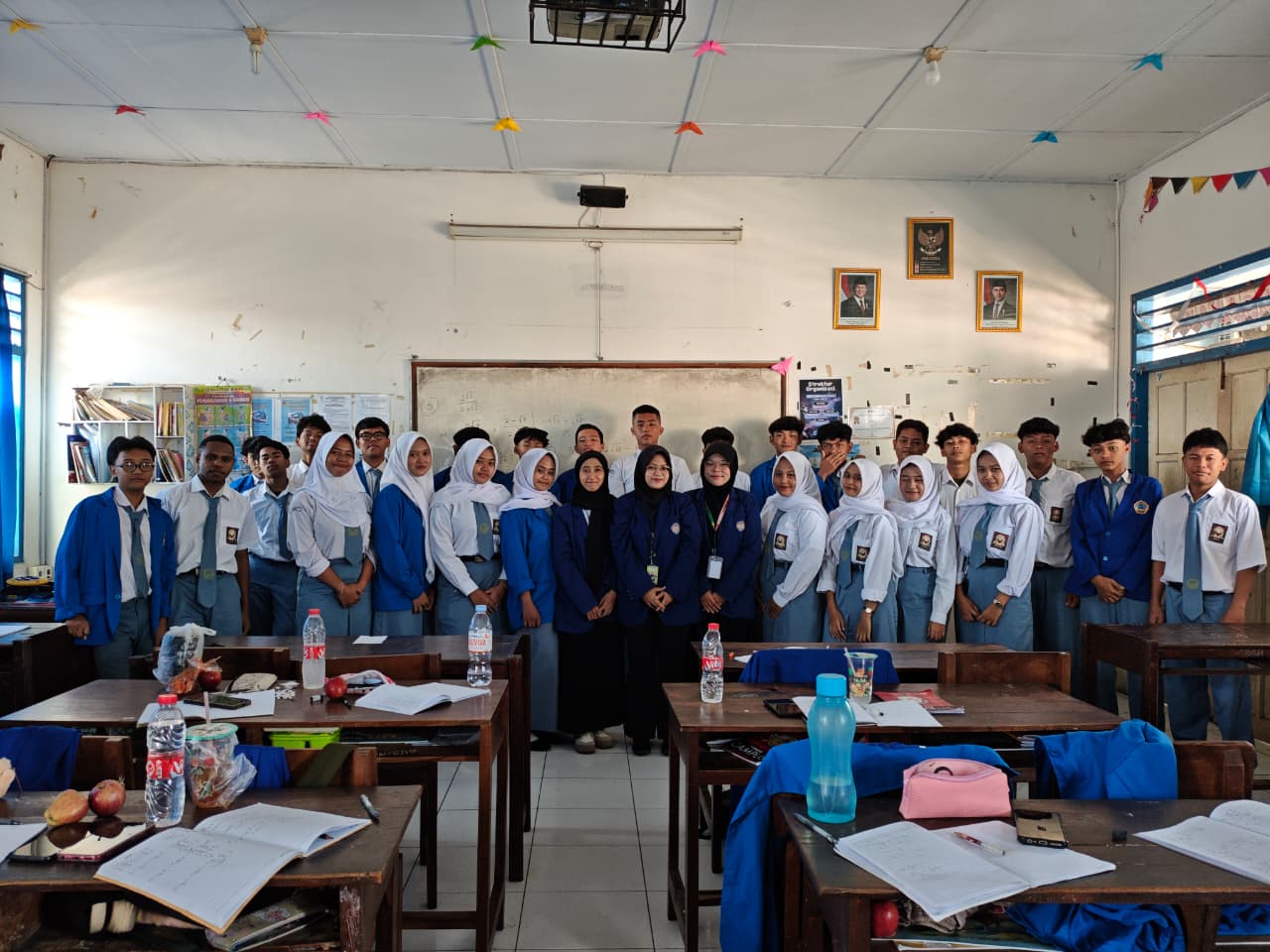
Yogyakarta, September 2026 — English learning at SMK PI Ambarrukmo 1 was closely connected to the students’ field of study during the UNY Educational Practicum (PK) 2026. As a vocational school focusing on hospitality and tourism, the school provides students with learning experiences that are closely related to the skills they may need in their future professional lives. In this context, English lessons were designed not only to introduce language concepts but also to help students use English in situations related to hospitality. The learning process also incorporated artificial intelligence (AI) as an innovative learning tool, allowing students to explore technology while developing their English skills.
During the practicum, English learning was conducted with Grade X and Grade XI students. Although the two grade levels worked with different types of texts, both classes followed the Genre-Based Approach (GBA). The approach guided students through a gradual learning process, starting from understanding the topic and language features before moving toward collaborative work and independent production.
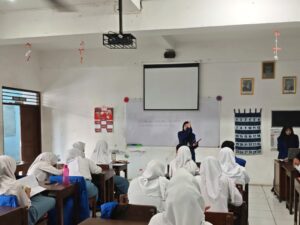
To make the learning experience more meaningful, the examples, learning materials, and classroom activities were consistently connected to hospitality-related situations. Rather than introducing English concepts through general or unrelated examples, students were encouraged to imagine how the language could be used in hotels, restaurants, tourism services, and other professional environments. This approach helped students recognize the relationship between what they learned in the classroom and the situations they might encounter in their future careers.
For Grade X, the main focus was Descriptive Text. The learning materials were connected to hospitality contexts so that students could see how descriptive language can be used in situations related to their field. Instead of learning descriptive text only as a classroom exercise, students were encouraged to understand how descriptions can be useful when talking about places, facilities, services, and other things they may encounter in the hospitality industry.
The learning process began with Building Knowledge of the Field (BKoF). At this stage, students were introduced to the topic and the relevant vocabulary and concepts. The examples used during this stage were drawn from hospitality-related situations, helping students build an understanding of the topic through contexts that were familiar or relevant to their vocational studies. The teacher then moved to the Modeling of the Text (MoT) stage, where students examined examples of descriptive texts and identified how the texts were organized and how particular language features were used.
After students became familiar with the model texts, they worked together during the Joint Construction of the Text (JCoT) stage. Students collaborated to identify information, organize ideas, and construct parts of a text with guidance. This stage allowed them to discuss their ideas with their classmates while still receiving support before working independently.
The final stage was Independent Construction of the Text (ICoT). Students were asked to create their own descriptive texts based on the material they had learned. By working with hospitality-related topics, students could practice describing objects, places, or facilities while imagining how such descriptions might be used in a professional setting. Through this process, students gradually moved from receiving explanations and examining examples to producing their own English texts.
A similar learning sequence was implemented in Grade XI, although the focus shifted from Descriptive Text to Hortatory Exposition. The topic was connected to hospitality-related situations, allowing students to discuss issues and ideas that could be relevant to the industry they are preparing to enter. The use of hospitality-based examples enabled students to consider practical issues within their field, making the process of developing arguments and recommendations more connected to their future professional environment.
In the BKoF stage, students first built their understanding of the topic and the context surrounding it. They then moved to MoT, where they analyzed examples of Hortatory Exposition and identified elements such as the thesis, arguments, and recommendation. Rather than immediately asking students to write, the learning process gave them time to understand how an argument is developed and supported.
The JCoT stage provided an opportunity for students to work in groups. They organized ideas, identified arguments, and worked together to construct the text. During the ICOT stage, students created their own Hortatory Exposition texts and developed their ideas into a poster project. Through the project, students were able to practice expressing opinions, organizing arguments, and presenting recommendations while also using creativity to communicate their ideas visually.
In addition to text-based learning and collaborative activities, AI was introduced as part of the learning innovation during the practicum. Students were guided to explore how AI could support their learning process, particularly when developing ideas, examining language use, and engaging with English-related tasks. The integration of AI provided students with an opportunity to become familiar with technology that may also be relevant to their future learning and professional environments.
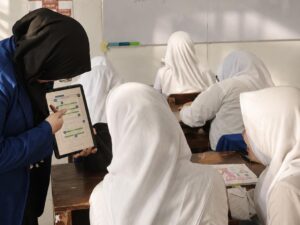
The use of AI was connected to the broader learning objectives rather than being treated as a replacement for students’ own thinking and production. Students were encouraged to engage with technology as a learning aid while continuing to develop their ability to understand information, organize ideas, and produce English independently. This approach supported the integration of digital literacy into English learning and introduced students to one of the technological developments that may influence the hospitality industry.
The teaching process was carried out over eight meetings in total, with four meetings for Grade X and four meetings for Grade XI. The final meeting for each class was used for an assessment, giving students an opportunity to demonstrate their understanding after going through the complete learning process.
More than teaching students how to follow the structure of a particular text, the use of GBA created opportunities for students to develop skills that extend beyond English itself. In BKoF and MoT, students developed their understanding of topics and examined how texts work. Through JCoT, they learned to discuss and construct ideas with others. Finally, ICOT required them to take greater responsibility for producing their own work. The integration of AI also introduced an additional dimension to the learning process by encouraging students to engage with digital tools as part of their educational experience. In this way, the learning process involved communication, collaboration, critical thinking, creativity, digital literacy, and independent learning.
These skills are particularly relevant in vocational education. Students preparing for careers in hospitality and tourism will not only need to know how to use English correctly but will also need to communicate information, interact with other people, work as part of a team, and express ideas appropriately in professional situations. They may also encounter digital technologies that support communication, service delivery, and workplace operations.
Therefore, connecting English lessons with hospitality contexts allowed students to practice language skills while simultaneously developing competencies that can be useful in their future workplace. By using hospitality-related examples throughout the learning process, students were given opportunities to imagine how English could be applied in real situations, such as describing hotel facilities, discussing services, or presenting recommendations related to the hospitality industry. This connection helped bridge the gap between classroom activities and the practical demands of vocational education.
The integration of AI further expanded this learning experience by introducing students to digital tools within an educational context. As technology continues to become part of various professional fields, including hospitality and tourism, introducing AI in the classroom provided students with an opportunity to explore innovative ways of learning and interacting with information. The experience encouraged students to view technology not only as a source of information but also as a tool that can be approached critically and used to support their learning.
This connection between classroom learning and students’ future professional needs also relates directly to Sustainable Development Goal 4 (SDG 4): Quality Education. SDG 4 emphasizes inclusive and equitable quality education and lifelong learning opportunities for all. More specifically, Target 4.4 calls for an increase in the number of young people and adults who have relevant skills, including technical and vocational skills, for employment, decent jobs, and entrepreneurship.
The English lessons at SMK PI Ambarrukmo 1 reflect this goal through the effort to make learning relevant to the students’ vocational pathway. Rather than separating language learning from vocational preparation, the lessons brought the two together. Students practiced English through topics and activities related to hospitality while also developing transferable skills through group work, text analysis, independent writing, project-based activities, and the introduction of AI as a learning innovation.
The connection to SDG 4 can therefore be seen not simply in the fact that English was taught at school, but in how the learning was designed to provide students with meaningful and relevant competencies. The gradual process of GBA gave students opportunities to move from guided learning toward independent performance, while the hospitality context helped them understand why those language skills could matter beyond the classroom. Meanwhile, the integration of AI highlighted the importance of introducing students to digital learning practices that may support their continued development in an increasingly technology-oriented world.
For Grade X students, creating descriptive texts helped them practice communicating information clearly, a skill that can be useful when describing places, facilities, or services in hospitality settings. For Grade XI students, developing Hortatory Exposition texts and presenting their ideas through posters gave them opportunities to formulate arguments and recommendations. Because the examples and learning activities were connected to hospitality situations, students could more easily visualize how these communication skills might be applied in their future work. These activities encouraged students to use English for communication and problem-solving rather than treating the language only as a set of grammatical rules.
The experience also showed that quality vocational education does not have to be limited to technical practice. Language learning can become part of students’ professional preparation when classroom activities are connected to the field they are studying. In this case, English served as both a subject of study and a practical communication skill within the hospitality context. The use of AI also demonstrated how innovative learning tools can be incorporated into classroom activities to support digital literacy and broaden students’ learning experiences.
Through the eight-meeting learning process, students were given space to learn, analyze, collaborate, create, and demonstrate their understanding independently. The experience at SMK PI Ambarrukmo 1 illustrates how English education in a vocational school can contribute to the broader goal of quality education by connecting academic learning with relevant skills for students’ future pathways. By combining hospitality-based learning examples, the Genre-Based Approach, and AI as an innovative learning tool, the practicum provided students with opportunities to connect English learning, digital literacy, and vocational preparation in a meaningful classroom environment.
Contributor: Fitri Annisa Huwaidah, English Education Study Program, Universitas Negeri Yogyakarta.




Leave a comment